
Resume guide
Resume Summary Examples That Don't Sound Generic
The summary at the top of your resume is the first thing read and the most often wasted. Here's a simple formula and real examples for different career stages.
What a summary is for
A resume summary is two to four sentences that tell the reader, in seconds, who you are professionally and why you're worth the interview. It replaces the dated 'objective' statement, which talked about what you wanted. A summary talks about what you offer. It's most useful when a recruiter is skimming a stack and deciding which resumes to read properly.
A formula that works
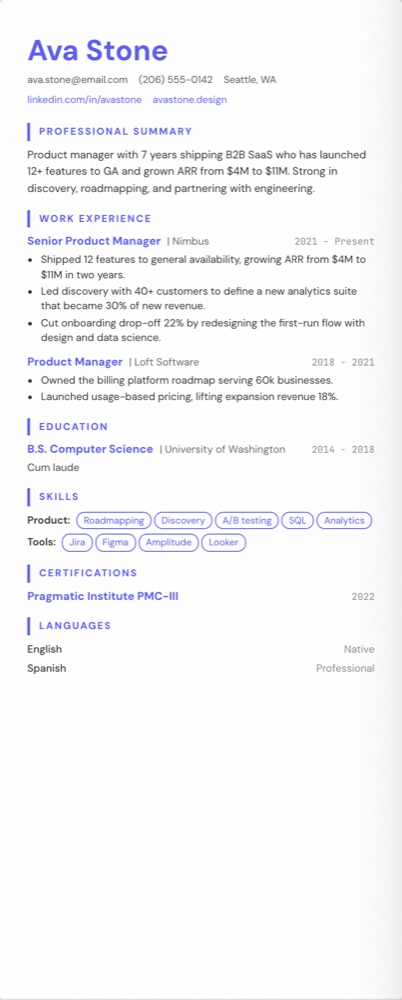
You can write a strong summary by filling four slots: your role and seniority, your years or scope of experience, one or two standout results, and the kind of role you're aiming at. Then cut anything generic.
Before and after
Generic summaries are interchangeable. Specific ones are memorable. Compare:
- Generic: 'Hard-working professional with strong communication skills and a passion for results, seeking a challenging role.'
- Specific: 'Operations manager with 7 years in e-commerce logistics who cut fulfilment costs 22% across three warehouses. Looking to lead supply-chain operations at a growth-stage retailer.'
Examples by career stage
New graduate: 'Computer science graduate who shipped two full-stack projects to real users and interned on a payments team. Strong in React and Python, looking for a junior software engineering role.'
Mid-career: 'Marketing specialist with 5 years in B2B SaaS who grew inbound leads 3x through content and SEO. Seeking a demand-generation role where I can own the funnel end to end.'
Senior / leadership: 'Engineering manager who scaled a team from 4 to 16 and delivered a platform rebuild six weeks early. Looking to lead a product engineering org at a company shipping to millions.'
Career changer: 'Former secondary teacher moving into UX research, with a year of self-directed projects and a certificate in human-centred design. Strengths in interviewing, synthesis, and turning messy feedback into clear recommendations.'
Common mistakes
- Listing adjectives instead of evidence ('dynamic, motivated, passionate').
- Writing in the first person with 'I' repeated; drop the pronoun and start with the role.
- Making it five sentences long; if it's a paragraph, it won't get read.
- Reusing the exact same summary for every application instead of nudging it toward each role.
Write yours, then build the rest
Draft your summary last, once your experience section reminds you of your best results. Then drop it into a builder that handles the formatting. Floati's free builder gives you a summary section, ATS scoring, and a dozen templates, all in the browser with no sign-up.
Frequently asked questions
Do I need a summary at all?
It's optional but valuable, especially mid-career and above. If you're very early-career with little to summarise, your space may be better spent on projects and education.
Summary or objective?
Summary. Objectives ('seeking a role where I can grow') are dated and focus on what you want. A summary focuses on what you bring.
How long should it be?
Two to four sentences. If it runs longer than four, it stops being a summary and stops getting read.
Should I tailor the summary per job?
Yes, lightly. Adjust the target role and lead with the result most relevant to each posting.
Build your resume, free
A live ATS score, 12 recruiter-ready templates, and instant PDF export. No sign-up, no watermark.
Open the resume builder